Showing posts with label Parsha. Show all posts

Thursday, May 17, 2018

Parshat Bamidbar 5778 - Standard Bearers

Parsha Paragraphs
Rabbi Naftali Kassorla
Parshat Bamidbar 5778
Standard Bearers
The D’var Torah for this week is dedicated in memory of:
לע״נ סבי ומורי נחום בן פנחס הלוי ז״ל
If you are interested in sponsoring a D’var Torah in honor or in memory of someone, or for any occasion, please email: ParshaParagraphs@gmail.com


With this week's Parsha we begin a new book in the Torah - Sefer Bamidbar. The central focus of this book is the laws and history of the Mishkan as the Jews travel through the desert. 

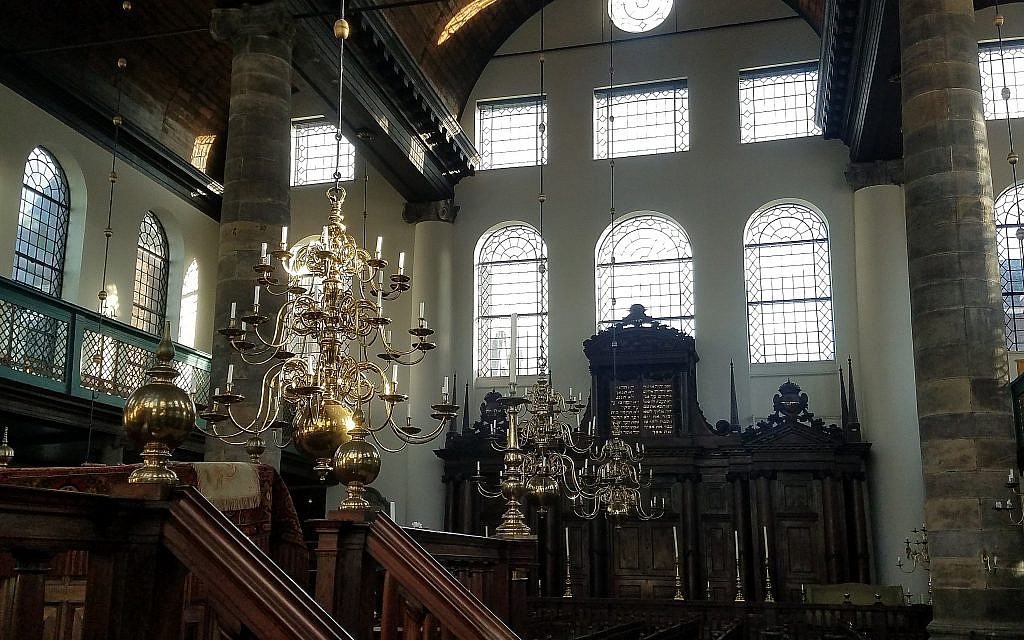
The Ramban points out that there are many interesting parallels between the description of the Mishkan and that of the revelation at Har Sinai. From this comparison we learn that the Mishkan, the Beit Hamikdash, and later the community synagogue are meant to serve as a reminder of the amazing experience the Jews had at Har Sinai. When the Torah was given, the Shechina (Divine Presence) came down and temporarily rested among the nation. In the Mishkan (as well as the Beit Hamikdash and the shul) the Shechinah rests permanently, and we have the opportunity to re-enter the experience we had at the giving of the Torah on a daily basis.

Perhaps we can take the Ramban's concept a little further. The beginning of the Parsha deals with the counting of the nation, yet Hashem specifically commands Moshe: "but you shall not count the tribe of Levi, and you shall not take a census of them among the children of Israel." 

At first glance this is very interesting – why does Hashem give the command not to count the tribe of Levi? Are they not part of the nation as well? Rashi explains that it was because this tribe chose not to sin with the golden calf at Har Sinai, and therefore they are not to be counted with the rest of the nation, but rather as a separate entity. We can derive from here that since the Leviim did not sin with the golden calf, they are considered to be of a distinct, higher standing.

Immediately after this commandment, Hashem directs Moshe to entrust the tribe of Levi with the assembling, disassembling and transporting of the Mishkan. One might ask why it was that the tribe of Levi was specifically chosen. In what were they meritorious, and what connection does it have with the Mishkan?

However, according to the aforementioned Ramban and Rashi, the connection between the Leviim and the work in the Mishkan becomes even clearer. As we know, the nation reached incredible heights at the revelation by Har Sinai. To have Hashem's divine presence revealed was the most seminal moment of holiness in this world and its power echoes through the generations to this very day. 

According to our tradition, the Nation reached the same level as Adam Harishon before the sin with the Tree of Knowledge, almost meriting the coming of Mashiach. Yet these hopes were dashed when the nation sinned with the golden calf, thus causing the nation to tumble from their lofty level. 

But one tribe remained steadfast in their devotion to Hashem; this was the tribe of Levi. This tribe, in withstanding from sinning, retained that holiness which was reached at the revelation.

Perhaps this is the reason that Levi was chosen. Since they were the only ones who did not sin at Har Sinai – and therefore the only ones who did not fall from their high level – it stands to reason that only they could do the service in the Mishkan, this "mini-Har Sinai." Levi would serve as the constant bearers and reminders of that divine revelation that was witnessed by all of Klal Yisrael at Har Sinai.

We see that in choosing Levi, Hashem is once again highlighting the connection between Har Sinai and the Mishkan, the Beit Hamikdash, and the Shul. We may often take for granted the level of holiness that we can achieve by entering our local shuls, and the proper respect with which they are to be treated.

With Shavuot upon us, it is quite appropriate that this should be our lesson carrying us in. For while we did not consciously experience the giving of the Torah personally, we have the incredible opportunity to return back to the level that was reached there, every time we enter a shul to daven or learn. If we truly take this idea to heart and behave in shul as though we are visiting the shechinah, we too can be on the level of the Leviim and merit to see the return of the Beit Hamikdash where we can once again do the Divine service, speedily in our days.

Shabbat Shalom and Chag Sameach

Thursday, April 19, 2018

Parshat Acharei Mot - Kedoshim 5778: Not By Chance

Parsha Paragraphs
Rabbi Naftali Kassorla

Parshat Acharei Mot - Kedoshim 5778
Not By Chance
The D’var Torah for this week is dedicated in memory of:
ר׳ אלחנן יעקב בן מו״ח ר׳ שמואל פנחס ז״ל
If you are interested in sponsoring a D’var Torah in honor or in memory of someone, or for any occasion, please email: ParshaParagraphs@gmail.com

The parsha begins: “Hashem spoke to Moshe after the death of Aharon's two sons, when they approached before Hashem, and they died” (Vayikra 16:1). In Aharon's merit for accepting the decree without question, G-d introduces the Yom Kippur service. “בזאת יבא אהרן” – “With this shall Aharon enter [the holy of holies]” (ibid. 3).

Among the intricate and lengthy details of the Yom Kippur service, there is a compelling and mysterious aspect: the שעיר המשתלח, literally translated as “The sent he-goat.” The Kohen Gadol would set aside two he-goats, one on his left side and the other on his right. The Kohen would then stick both hands into a box filled with two lots. He would draw the lots, one in each hand. On one lot was written “לה׳”– this would be attached to one of the goats (the goat on the same side as the hand that drew this lot), and that goat would be brought as a קרבן חטאת (sin offering). The other lot read ״לעזאזל״ and was put on the other goat, which would be brought outside the city and pushed off a high cliff.

What is the significance of these lots? Seemingly it would be enough to set aside each one for a purpose, as with any other korban, i.e. one would be designated as a חטאת, and the other goat would be, by default, sent to Azazel. What is the purpose of labeling each goat separately, specifically through the process of a lottery?

There is a fascinating Gemara in Sanhedrin (43b) that can perhaps shed light on this question. After the miraculous destruction of Yericho, G-d placed a complete חרם (ban) on the spoils of war; no one was allowed to take anything from Yericho. In the next attempt at conquest, Yehoshua and the Nation fought the city of Ai, but were soundly beat back, losing thirty-six men in the battle. Yehoshua and the people were at a complete loss to understand why this tragedy befell the Nation, especially after such a powerful victory in Yericho. (See Yehoshua 7)

G-d comes to Yehoshua and tells him that someone in the camp has broken the חרם. Yehoshua asks G-d: “Who is it?” G-d responds “וכי דילטור אני (Am I a gossiper)?! Go, and make a גורל (lottery).” Yehoshua drew the lot, and it fell on Achan. Confronted with the results, Achan responded: “How can you find me guilty through lots? If I were to put you [Yehoshua] and Elazar Hakohen, two of the greatest of the generation, surely the lots would fall upon one of you as well!” Deeply bothered by this, Yehoshua responds: “Do not cast aspersions upon the lots, through which the land of Israel is destined to be apportioned!” Achan finally relents and admits his sin.

What was Achan’s argument here? And what about his argument upset Yehoshua so much?

The Maharsha, the famous commentator on the Talmud (ibid.), explains Achan’s defense as follows: “If I were to put only you [Yehoshua] and Elazar Hakohen in the box, of course it would fall on one of you.” Achan was claiming that there is no Providential authority to the lots; rather they are subject to “chance” – a מקרה בעלמא – just a random chance! And the biggest proof is: For even if he were to put two of the most saintly people, leaders of the generation, one of them would be found “guilty”, despite them being completely innocent. If they were the only options, then of course, statistically it would have to fall on at least one of them. Achan’s argument was that surely the lots are not a proof that he committed any wrongdoing.

But really this argument was a great disrespect to Yehoshua, for Achan was attacking a basic premise in Judaism: That G-d maintains an intimate and personal relationship with the Jewish people. Our Nation exists on a wholly different plane than the rest of the world. The Gemara says (Shabbat 156b) אין מזל לישראל, that we as a Nation are not governed by “chance” or statistics, rather we are tended to with love; guided and cared for directly by the One Above*. Therefore, if the lot fell on him, it was surely decided by G-d himself. (And if Yehoshua and Elazar were the only ones placed in there, G-d would find a way to make sure neither one comes out!)

To claim or suggest that something is just by chance or happenstance, removes the unique connection that G-d has bestowed upon the Jewish people, having set us aside from among the Nations of the world. And this is what Achan was attacking. Therefore, Yehoshua was deeply angered at this wanton disrespect for the lottery; he knew that nothing is by chance, and nothing that happens in this world is without G-d’s personal knowledge and direction.

This is why lots are an integral part of the Yom Kippur service in the Beit Hamikdash. They stand as symbols to the Jewish people that we are in the Hands of G-d, just as our fate and forgiveness on this holy day is decided by G-d alone. Not by chance or statistics, but rather a clear and guiding Master, and unto Him do we pray for our personal and National salvation. These lots would serve as a testament for all, that we are not cast into this world without Divine direction or care, and that no matter what the statistics say, there is always a chance that Hashem will do differently.

I once heard a remarkable story: A father of three was unfortunately stricken with a rare disease, an illness that carried with it a low percentage of survival. The family, obviously devastated to receive such news, met with their doctor to discuss a plan of action. The doctor, a non-Jew, led the family through what felt like a dizzying maze of options of experimental medications, risky surgeries and consultations with other doctors–experts in the field. But just as the family arose to leave, the doctor stopped the family: “One last thing I must tell you...you are Orthodox Jews, and you have a very powerful tool; you have prayer. I can't tell you how many times I've seen your Jews beat the odds. It's like you people are not subject to percentages! As much as I’m a non believer, and as hard as it is to admit, I've seen it too many times to ignore. Please don't forget to pray.” The family, strengthened with this “medical advice,” stormed the Heavens with their prayers. Thank G-d, their father went on to live for many years in full health, truly “beating the odds.”

This doctor had a front-row seat to this special nature of Klal Yisrael. No כח (power) other than G-d Himself controls our fate, and surely not statistics – a complete absence of power. This is a message we can learn from the גורלות of the Yom Kippur service, which we can carry through all year long.

Shabbat Shalom


* While the nature of השגחה פרטית, especially the concept of אין מזל לישראל, is subject to dispute, this is only regarding the individual, but in reference to the Nation as a whole there is an almost unanimous agreement among the commentators that G-d is personally involved in the collective fate of the Jewish People. Whether an individual is “on the level” to be personally watched over by G-d, is a matter of debate.
Furthermore as mentioned previously, אין מזל לישראל, does not necessarily mean that there is no guiding מזל to the Nation, or for an individual at all. For example, Rashi says (ibid. S”V אין מזל): דעל ידי תפילה וזכות משתנה מזלו לטובה - that through prayer and a persons merits, he can change his “fate.” This implies that there is a מזל, but it is not set in stone, rather it can be changed if one prays or is meritorious.
Regarding Achan's guilt, proven by the lotteries, one could ask: Why is this not considered purely a personal השגחה פרטית question, which is subject to dispute as previously mentioned? The answer to this is as follows: the lots were cast in order to discern the reason for why the Nation lost to Ai, which is ultimately a collective issue. The entire context and purpose of this episode in the Gemara in Sanhedrin is that the punishment for Achan’s sin was a carrying-out of collective punishment after crossing the Jordan, the time at which Klal Yisrael became subject to “כל ישראל ערבים זה בזה” – collective responsibility.

Parshat Tazria-Metzora 5778: A Life Apart

Parsha Paragraphs
Rabbi Naftali Kassorla

Parshat Tazria-Metzora 5778
A Life Apart
The D’var Torah for this week is dedicated in memory of:
 ר׳ אלחנן יעקב בן מו״ח ר׳ שמואל פנחס ז״ל
If you are interested in sponsoring a D’var Torah in honor or in memory of someone, or for any occasion, please email: ParshaParagraphs@gmail.com
This week’s parsha tells us of the Metzora – someone afflicted with Tzaraat – who must be put חוץ למחנה ישראל, sequestered from the Jews’ encampment.

Why is utter isolation the appropriate punishment for the Metzora?

The Gemara in Arachin (15b) gives an interesting explanation:

"אמר ריש לקיש מאי דכתיב (ויקרא יד-ב) זאת תהיה תורת המצורע זאת תהיה תורתו של מוציא שם רע"
“Reish Lakish said: What is stated ‘This shall be the law of the Metzora’ (Vayikra 14:2) – This shall be the law of one who slanders”

This affliction comes upon one who has actively slandered others. Thus, it seems befitting that the punishment for this person is alienation. By slandering others, he is misusing the gift of speech – a potential means of connection to others and building a cohesive society – in order to wreak havoc and bring destruction to humanity. Such a person shows that he is not fit to live among the rest of the people.

Unfortunately, we see too often that slander is used to “get ahead” in the workplace and in life. Man will “play” one person against another in an attempt to curry favor with both, thinking this will make him successful. But the Torah tells us that this behavior will ultimately lead to his downfall. The message here is clear: in the end, it is the slanderer who will be left isolated and alone.

Rav Chaim Shmuelevitz זצ״ל explains why Chazal (Nedarim 64b) includes the Metzora among the four who are considered dead even in life: 1. The Poor man; 2. The Childless; 3. The Blind Man; and 4. The Metzora. Each one of these categories of people are in some way or another excluded from “society.” The poor man cannot afford his basic necessities as others can, the barren are excluded from family activities, and the blind man cannot sense what others sense. In these ways each one is “removed” from the general public. The Metzora too, due to his own infractions, cannot partake of civil society. He is considered “dead,” not privy to live life (חיים) among others. 

I once heard from Rav Yecheskel Weinfeld שליט״א of Jerusalem, a beautiful idea. The word for life – חיים – is plural. This signifies to us that true life is not one of isolation. Rather it is to be shared with others. This dovetails beautifully with the message of the Metzora. He who is actively engaged in antisocial behaviors, using his speech to undercut and hurt others, is to be expelled from civilization – from “life.” 

Both the Kli Yakar and Rav Hirsch tell us that, in his isolation, the Metzora is now forced to reflect on his deficiencies and repent, so that he can once more become worthy of being a part of this Nation.

But while we antagonize the actions of the Metzora, the Torah does not allow us to forget his plight. The Gemara in Moed Katan (5a) quotes the verse “He [the Metzora] is to call out “Contaminated, Contaminated!” (ibid. 13:45). The Gemara explains that this proclamation is to serve the dual purpose of warning others of his affliction, so that they will not come to contamination, and also to: “inform the public of his anguish, so that they may pray for him.”

This Gemara has always fascinated me. The Metzora has done irrevocable damage to people’s lives, families and the general good of the community, to the extent that we disallow him any association with others. Seemingly, if there is a poster-child for a cancer on society, this person is it! When banishing him, shouldn’t we be saying: “Good riddance!”? Yet we see the complete opposite response is expected. The Torah demands of us to pray for him, that he should fix his ways and learn his lesson. I believe the Torah is communicating a deep and nuanced idea here: while we banish the Metzora for his crimes against humanity, through that process we cannot lose our humanity; we must still be able to empathize and care for everyone.

Speech is really an amazing thing. It has no physical characteristics (דבר שאין בו ממש), yet we see that it has the power to build or destroy, alienate or connect. We would be wise use the power of speech, not to put-down and belittle, but rather as a tool to create and empower. The common adage that everyone’s mother has told them at least once is: “If you have nothing nice to say, don’t say it.” But I want to add to that: If you have something nice to say, say it! Positive words and affirmations, which to us may be a mere afterthought, can be opportunities to change a person’s day, or even his life.

The Vilna Gaon has an amazing idea, quoted in his brother’s sefer Maalot HaTorah on the pasuk in Tehillim (1:3): והיה כעץ שתול על־פלגי מים אשר פריו יתן בעתו ועלהו לא־יבול...״ (He [The Righteous] is like a tree planted beside streams of water, which yields its fruit in season, whose leaves never fade). Chazal brings ועלהו לא־יבול (his leaves never fade) as the source for the concept that שאפילו שיחת תלמידי חכמים צריכה לימוד  – that even mundane conversations of Torah Scholars need to be gleaned for lessons (Sukkah 21b). The Gr”a asks: how in the world did Chazal see in these words that even their everyday conversations are worthwhile? The Gr”a answers that man is compared to a tree, as it says in Devarim (20:19) כי האדם עץ השדה, and the פרי, the fruit of man, is when he speaks about Torah topics. Just as the leaves on the tree protect the fruits, so too the leaves (ie. the mundane matters he discusses) protect the Torah. For the way one utilizes his mundane speech, reflects on the quality of the person’s Torah. Torah scholars, whose quality of Torah is so great, will have that reflected in their “everyday” discussions, and therefore there is much to be gained from them always.

The day presents itself with countless opportunities for communication and proper use of our words. Thus we too, each on our own level, can and should take advantage of these opportunities, to build closer connections with positive words.


Shabbat Shalom
Related Posts Plugin for WordPress, Blogger...