Thursday, June 20, 2019

Shelach 5779 - Leading from In Front Above


Parsha Paragraphs
Rabbi Naftali Moshe Kassorla
Shelach 5779
Leading from In Front Above

The D’var Torah for this week is dedicated for the urgent Refuah Shleimah of:
אליהו בן שרה גיטל
To sponsor a D’var Torah in honor or in memory of someone, or for any occasion, please email: ParshaParagraphs@gmail.com

This week’s parsha contains the episode of the spies. The Meraglim were sent to scout the Land of Israel, for the future settling of the Jewish People there. Hashem comes to Moshe saying: “Send forth for yourself men, and let them spy out the Land of Canaan” (Bamidbar 13:2). Noting the interesting additional phrase לך (for you), Rashi quotes the Midrash Tanchuma which says that the idea to send out the spies was not a commandment from Hashem; rather, it was a response to the people’s request to do so.

When the spies return, all of them (aside from Yehoshua Bin Nun and Calev Ben Yefuneh) deliver negative reports of Eretz Yisrael. Thoroughly scaring Klal Yisrael, the Meraglim cast doubt in the hearts of the people about entering the Land.

The Torah recounts the entire response of Klal Yisrael:
The people wept that night. All the Children of Israel murmured against Moshe and Aharon and the entire assembly said to them, “If only that we had died in the land of Egypt, or if only that we had died in the wilderness! Why is Hashem bringing us to this land to fall by the sword? Our wives and young children will be taken captive! Is it not better for us to return to Egypt?” So they said to one another נתנה ראש ונשובה מצרימה – “Let us appoint a leader and let us return to Egypt!” (ibid. 14:1-4).

Distressed upon hearing Klal Yisrael’s emotional response, Moshe and Aharon “fell on their faces before the entire congregation of the assembly of the children of Israel” (ibid. 5).

There seem to be two parts to Klal Yisrael’s reaction to the Meraglim’s report: The Nation first responds by speaking directly to Moshe and Aharon – questioning why Hashem would bring them out to the desert to die, saying, “Is it not better for us to return to Egypt?” That is the first stage.

In the second stage, they speak amongst themselves, expressing their doubts to each other saying, “...Let us appoint a leader and let us return to Egypt!”

Now, in looking at Moshe and Aharon’s reaction, which stage were they responding to? One might expect that Moshe and Aharon would react immediately to the first stage – to the blasphemous statements uttered by the people. However, it seems clear from the verses that when falling on their faces, Moshe and Aharon did so directly after B’nei Yisrael said, נתנה ראש ונשובה מצרימה – “Let us appoint a leader and let us return to Egypt.”

Seemingly, the fact that B’nei Yisrael doubted Hashem did not immediately elicit the great distress of their leaders. Rather, only once the people expressed their desire to appoint a new leader, did Moshe and Aharon respond strongly. What was it about this second stage that so greatly shocked Moshe and Aharon – more than the outright blasphemous statements said earlier?

I would like to suggest that the initial פחד of Klal Yisrael was not only understandable, but maybe even justifiable. A feeling hysteria in regards to the terrifying reports would only be natural. This instinctive response was clearly not what triggered the distress of Moshe and Aharon.

Rather, perhaps what caused such an intense response from Moshe and Aharon was the underlying idea expressed in the People’s emotional state with the suggestion of: נתנה ראש ונשובה מצרימה – “Let us appoint a leader and return to Egypt.” The implication that one can appoint leaders for themselves to carry out the people’s bidding, and not vice versa, was a shock to Moshe and Aharon.

Judaism has a unique system of leadership which differs greatly from other forms of government. At its core, Judaism is a G-d-centered religion. This is expressed in the laws and commandments which are wholly unique in that their underlying justification and authority is ultimately established by the omniscient Hashem Who decreed them. (This is true even for those mitzvos which can be understood or even deduced logically.) They are infused with the unchanging wisdom of the Creator of the Universe; this divinity makes them applicable for all generations.

Taking this idea further, it logically follows then that our leaders and prophets would need to be “chosen” by Hashem, rather than be elected or appointed by the people. And in fact, we see throughout the Torah that all the great Prophets in our history have been “called upon” to carry out their tasks. Beginning with Noach, continuing with Avraham and Moshe, all the way down to Yirmiyahu HaNavi, all were appointed from On High to their tasks. This shows us that the true leadership of the Jewish people is directed by Hashem himself.

Therefore, this suggestion נתנה ראש ונשובה מצרימה attacked the very foundation and future guidance of Klal Yisrael, and if this suggestion were to be carried out, it would corrupt the prevailing message that Judaism espouses: Hashem is intimately and actively involved in this world and in our lives. From the laws given to us, to the leaders who guide us, all are under the auspices of Hashem’s wisdom, which far exceeds that of any human being.

The threat posed by the people’s suggestion required a vociferous response from Moshe and Aharon. The people’s fright – that could be dealt with later; minds could be cooled and fears could be allayed. But to let them act on those fears, and to allow worries to corrupt the central message of Judaism? No – that could not go unanswered; that needed to be addressed.

Though we live in times where the guiding light of prophecy has dimmed, and we often feel bereft of direction, we are still left with this lesson for all times: to seek people of high spiritual caliber to guide us, not for us to guide them.

The idea that a community can view the holy task of appointing a leader for themselves as a means to fulfill their own desires – to, in a sense, give a “hechsher” to act however they please – completely flies in the face of a Kehilla which desires to grow and be uplifted. The community doesn’t direct the leader! Rather it must be the leader who directs and steers the people.

Let us pray for the coming of Moshiach speedily in our days, with the full return of prophecy, to guide us properly on Hashem’s path for all of our days. Amen.

Shabbat Shalom

Beha’alotcha 5779 - To Stand Alone


Parsha Paragraphs
Rabbi Naftali Moshe Kassorla
Beha’alotcha 5779
To Stand Alone
The D’var Torah for this week is dedicated in honor of:
——-
If you are interested in sponsoring a D’var Torah in honor or in memory of someone, or for any occasion, please email: ParshaParagraphs@gmail.com

This week’s parsha features the official commandment to distinguish the Levi’im for their special, appointed task: קח את הלוים מתוך בני ישראל – Take the Levi’im from among the Children of Israel…(Bamidbar 8:5). Their job would be serve as guardians and caretakers of the Mishkan.

The Midrash Tanchuma (8) makes a fascinating statement: As a general rule, Hashem does not raise anyone to a position of authority (שררה) until He has “tested” them, and once they have passed and proved their mettle, Hashem appoints them to their position.

The Midrash then cites the Tribe of Levi as a prime example of this rule. They proved their fealty when they did not abandon the Torah in Egypt. For when the Jews were enslaved and subjugated to intense labor, the Nation scorned Torah and ברית מילה, and worshipped idols. In contrast, the Levi’im were wholly righteous and kept the Torah. The Midrash continues: ולא עוד  – But not just that – but when the rest of Klal Yisrael sinned with the Golden Calf, the Levi’im did not join in with them.

This Midrash has bothered me for several years and I would like to share my thoughts on it.

First, I find the praise of the Levi’im for not abandoning Torah and Mitzvot in Egypt to be a bit perplexing. We already know from other places (Rashi, Shemot 5:4, Midrash Rabbah 5:17) that the Levi’im were not subject to the back-breaking slavery in Egypt. It stands to reason that the rest of the Nation, who were enslaved, would have been confronted with the almost insurmountable challenge of remaining strong in their Torah observance while being subjugated to intense labor.

But the Levi’im, who didn’t have the עול שיעבוד (the yoke of slavery) upon them, what “test” did they face? Their time was not fully occupied and they would have had the wherewithal to be able to keep the Torah, without any pressure. What is this heavy praise being heaped upon them, and why their observance a “proof” of their worthiness to take on positions of authority?

Second, if I were to think of the natural proof of Shevet Levi’s faith, it would be their refusal to join in with the עגל הזהב – The Golden Calf. This was the moment which set forth for all generations that Shevet Levi is set aside as a special class, for they stood strong and answered Moshe’s call of מי לה׳ אלי. Wouldn’t that episode be more demonstrative of Levi’s excellence? Yet fascinatingly, the Midrash seems to reference this amazing feat almost as secondary, a mere addition to the first episode. Seemingly, the specific episode of the Levi’s courage to not join with the rest of the people in serving the Egel should have been given as the first, prime example of strength!

I would like to suggest that in referencing the loyalty of Shevet Levi in Egypt, the Midrash is telling us something very particular about their nature and giving us a window into the true sign of its strength.

What do we see from the fact that Levi did not abandon the mitzvot in Egypt? For weren’t they already separate and different, in that they were not enslaved? But this is precisely the point. They did not succumb to the innate human desire to conform. While everyone else had lost their sense of self, Shevet Levi did not fall into the trap of moral license, justifying joining in with “the crowd.” When the public behaves a certain way, it is very easy and comfortable to conform to the people around you. Instead they retained the essence of their character, and refused to join in with the majority. 

The mere thought of standing alone and being at odds with the rest of society is difficult. Nobody likes to be disjointed from the larger group, as the human mind has a tendency to gravitate towards “groupthink” and conformity. When we are part of a larger group, it gives us the calming feeling of self-assurance and the perception that our lives fit into place. In contrast, the pressures of being separated from the majority has been shown to push people into a dark, deep existential angst which can lead to self-destruction. Thus, for someone to stand apart, they are subjecting themselves to an arduous array of emotional repercussions. But if they emerge whole from this process – this spiritual journey – they emerge as a new being. One that is untouchable by the winds of degeneracy and the manic whims of the majority.

With this in mind, we can now understand our second question. We asked, why does the Midrash seem to almost gloss over the fact that Shevet Levi did not join in with the עגל הזהב, which seemed to be a much stronger proof of their strength?

I believe the answer is that their later refusal to join in serving the Egel was built off of the strong base of their long refusal to succumb to conformity. Throughout 210 years of slavery, this Shevet trained themselves to withstand immense pressure and the intense fear of standing alone. This, then, gave them the basis to answer Moshe’s call of מי לה׳ אלי.

This was Levi: the tribe that would be set aside to be the teachers of the Jewish people, as the verse says: יורו משפטיך ליעקב ותורתך לישראל – They [Shevet Levi] shall teach Your laws to Jacob, and Your instructions to Israel (Devarim 33:10). For though it was Hashem Who set the Levi’im aside, the Levi’im already showed in Egypt that they were capable of doing it themselves!

Standing alone, as daunting as it may be, is a true display of spiritual strength, and is a clear measure of the readiness for leadership. To be a teacher, a leader, a person of authority, one cannot be subject to the whims and persuasions of public opinion. One must be strong in his ideals and steadfast in his decisions. And just as Levi proved themselves worthy, so too we should be given the strength to stand up and show our true mettle in trying times.

Shabbat Shalom

Friday, June 7, 2019

Parshat Naso 5779: Family Matters

Parsha Paragraphs
Rabbi Naftali Moshe Kassorla

Parshat Naso 5779
Family Matters
The D’var Torah for this week is dedicated in honor of:
אשתי החשובה מינדל אסתר בת זיסל רבקה

If you are interested in sponsoring a D’var Torah in honor or in memory of someone, or for any occasion, please email: ParshaParagraphs@gmail.com

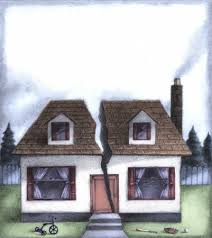
Among the many topics discussed in this week's parsha are the laws concerning the Sotah. I would venture to say that this has to be one of the saddest episodes in the Torah – a story of distrust between husband and wife, leading to the destruction of their שלום בית.


A woman becomes a Sotah when a man accuses his wife of inappropriate behavior with another man. She is then instructed to drink the מי מרים. In these waters are placed a parchment on which the Parshat Sotah is written, most importantly including Hashem’s Ineffable Name. By placing the scroll in the waters, Hashem’s name is erased.
We must keep in mind that erasing Hashem’s Name is a very serious aveirah. Rashi explains that the Kohen would actually send the Sotah from place to place so that she would tire out - perhaps this would cause her to confess, thus saving Hashem’s Name from being erased. The Gemara tells us the Kohen would plead with her to confess saying:
עשי לשמו הגדול שנכתב בקדשה, שלא ימחה על המים
Act for the sake of His Great Name written in holiness, so that it will not be erased by the water!

The question I have asked myself for years is: why must the name of Hashem be erased? Would it not have been sufficient for the Sotah to be interrogated, or perhaps to have her read the the פרשת סוטה? Is the Hand of Hashem limited? Is this the only way to test the סוטה? I think there is a deeper lesson embedded in this process and from it we can take a tremendous lesson here on the paramount importance that Hashem places on שלום בית.

As we all are painfully aware, many petty squabbles and fights begin with some innocuous issue, be it a thoughtless comment one made, to something as menial as a window being left open. Small things that – in the big picture – can be ignored or dealt with on their own merits.

Yet too often, those small issues get escalated to a point beyond repair. Instead the issue gets “globalized,” with each side pointing to the “real” deeper issue involved here. By the time the disagreement reaches that stage, the initial reason for the fight is almost totally forgotten!

What was once something that could have been dealt with or ignored, has now become a complicated web of intricate and interconnected episodes which will almost surely become impossible to untangle.

This mess began, and was perpetuated, because each side wasn’t willing to compromise for the sake of שלום; each side insisted on proving that they are right, adding fuel to the already raging fire. No one was willing to “give in.”

The story of the Sotah probably did not begin with an accusation of unfaithfulness. It may have started with some small and petty argument which escalated, with each side fighting hard to be right. Only then was distrust sowed.

By erasing His Name, Hashem is sending the sharpest mussar to both sides: שלום בית cannot exist unless one is willing to be “erased,” willing to place the goal of שלום above the “self.” Hashem is saying: “If each of you is not willing to give in for the sake of peace, then I will give in - I will erase My Name.” For it is worth being the loser for the sake of Shalom.

This exact idea is really a Gemara in Nedarim (66b). The Gemara relates a story of a husband who made a vow to forbid his wife from any benefit from him, until she fulfilled a wacky idea:
ההוא דאמר לה לדביתהו קונם שאי את נהנית לי עד שתטעימי תבשילך לרבי יהודה ולר"ש ר' יהודה טעים אמר ק"ו ומה לעשות שלום בין איש לאשתו אמרה תורה שמי שנכתב בקדושה ימחה על המים המאררים בספק ואני על אחת כמה וכמה 
The Gemara relates: There was a certain person who said to his wife: Benefiting from me is forbidden by a vow for you, until you have given Rabbi Yehuda and Rabbi Shimon your cooked food to taste, for them to see how bad of a cook she was. She brought the food to them, and Rabbi Yehuda tasted it, without concern for his own honor. He said: This is Kal Vachomer, for in order to make peace between a man and his wife, Hashem said: My name, that is written in sanctity, shall be erased out in the waters that curse in preparing the water that a Sotah would drink. This is so even in a case of where it is uncertain if this will bring peace between them, as she may or not be guilty of adultery. I, all the more so, should waive my honor in order to bring peace to this couple.

Where did Rebbe Yehuda see from the erasing of Hashem’s name that he must forgo on his own honor? (In fact, the Gemara later relates that Rebbe Shimon refused to taste the food, as it was an affront to Torah Scholars to be “shlepped in” into such a crazy episodes.) How did Rebbe Yehuda know to make this Kal Vachomer? The answer, as we said above, is because the Borei Olam himself sets the tone by telling us in no uncertain terms: One's own personal honor can never stand as an impediment to making שלום.

When I was in my second year in Netiv Aryeh, I had the זכות of assisting my Rebbe HaRav Yoel Yehoshua שליט״א in the “Ask Rav Nevenzahl” project. Alumni of the Yeshiva would send halachic questions to us, which we would then learn the sugya together and the questions involved, then we would present the shayla to Mori V'Rabi HaRav Avigdor Nevenzahl שליט״א. The question we received and presented to the Rav was whether it was proper for a husband to wake up in the middle for תיקון חצות if, by doing so, there was a possibility he would wake up his wife. Rav Nevenzahl answered that this was absolutely forbidden, and after a short pause to gather his thoughts, Rav Nevenzahl said the words that will remain with me forever: “a lack of שלום בית is a greater churban than the destruction of the בית המקדש.”

I was astounded. Think of how many times a day we pray for the restoration of the בית המקדש? We devote so much time and energy to mourning its loss. Yet, the destruction resulting from lacking שלום בית is more severe than the חורבן הבית! Incredible!

It is said about the Satmar Rav זצ״ל that whenever he would hear of an engagement, he would give a brocha in Yiddish saying: דער שידוך זאל עולה יפה זיין - translated as “they should have a beautiful marriage.” But in the Satmar Rav’s deep גאונות, he was saying much more. The word עולה in Hebrew also means value, so the Rav was also saying the marriage should be the same in value – equal – to the Gematria of יפה. The value of י-פ-ה is 95. If one takes a look in the Sefer Hachinuch, what is the 95th mitzvah (מצוה צ״ה)? The mitzvah of ועשו לי מקדש ושכנתי בתוכם! Not only was the Satmar Rav blessing for a good marriage, but he was also providing the paradigm for a happy marriage: a marriage where Hashem – not the “self” – forms the bedrock of the relationship. A marriage truly is a microcosm of the בית המקדש, and of course it is no surprise that its destruction is compared to the Churban itself.

With Shavuot approaching, as we experience a re-acceptance of the Torah and Mitzvot – both Bein Adom L'Makom and Bein Adom L'Chaveiro – may we be zoche to rise to new spiritual heights, meriting the arrival of Moshiach speedily in our days. Amen.

Shabbat Shalom

Parshat Bamidbar 5779: Standard Bearers

Parsha Paragraphs
Rabbi Naftali Moshe Kassorla

Parshat Bamidbar 5779
Standard Bearers
The D’var Torah for this week is dedicated in memory of:
סבי ומורי נחום בן פנחס הלוי ז״ל
If you are interested in sponsoring a D’var Torah in honor or in memory of someone, or for any occasion, please email: ParshaParagraphs@gmail.com


With this week's Parsha we begin a new book in the Torah - Sefer Bamidbar. The central focus of this book is the laws and history of the Mishkan as the Jews travel through the desert. 

The Ramban points out that there are many interesting parallels between the description of the Mishkan and that of the revelation at Har Sinai. From this comparison we learn that the Mishkan, the בית המקדש, and later the community synagogue are meant to serve as a reminder of the amazing experience the Jews had at Har Sinai. When the Torah was given, the שכינה (Divine Presence) came down and temporarily rested among כלל ישראל. In the Mishkan (as well as the בית המקדש and the shul) the Shechinah rests permanently, and we have the opportunity to re-enter the experience we had at the giving of the Torah on a daily basis.

Perhaps we can take the Ramban's concept a little further. The beginning of the Parsha deals with the counting of כלל ישראל, yet Hashem specifically commands Moshe: "but you shall not count the שבט לוי, and you shall not take a census of them among the children of Israel." 

At first glance this is very interesting – why does Hashem give the command not to count שבט לוי? Are they not part of כלל ישראל as well? Rashi explains that it was because this tribe chose not to sin with the golden calf at Har Sinai, and therefore they are not to be counted with the rest of כלל ישראל, but rather as a separate entity. We can derive from here that since the Leviim did not sin with the golden calf, they are considered to be of a distinct, higher standing.

Immediately after this commandment, Hashem directs Moshe to entrust the שבט לוי with the assembling, disassembling and transporting of the Mishkan. One might ask why it was that שבט לוי was specifically chosen. In what were they meritorious, and what connection does it have with the Mishkan?

However, according to the aforementioned Ramban and Rashi, the connection between the Leviim and the work in the Mishkan becomes even clearer. As we know, כלל ישראל reached incredible heights at the revelation by Har Sinai. To have Hashem's divine presence revealed was the most seminal moment of holiness in this world and its power echoes through the generations to this very day. 

According to our tradition, כלל ישראל reached the same level as Adam Harishon before the sin with the Tree of Knowledge, almost meriting the coming of Mashiach. Yet these hopes were dashed when כלל ישראל sinned with the golden calf, thus causing כלל ישראל to tumble from their lofty level. 

But one tribe remained steadfast in their devotion to Hashem; this was שבט לוי. This tribe, in withstanding from sinning, retained that holiness which was reached at the revelation.

Perhaps this is the reason that Levi was chosen. Since they were the only ones who did not sin at Har Sinai – and therefore the only ones who did not fall from their high level – it stands to reason that only they could do the service in the Mishkan, this "mini-Har Sinai." Levi would serve as the constant bearers and reminders of that divine revelation that was witnessed by all of Klal Yisrael at Har Sinai.

We see that in choosing Levi, Hashem is once again highlighting the connection between Har Sinai and the Mishkan, the בית המקדש, and the Shul. We may often take for granted the level of holiness that we can achieve by entering our local shuls, and the proper respect with which they are to be treated.

With Shavuot upon us, it is quite appropriate that this should be our lesson carrying us in. For while we did not consciously experience the giving of the Torah personally, we have the incredible opportunity to return back to the level that was reached there, every time we enter a shul to daven or learn. If we truly take this idea to heart and behave in shul as though we are visiting the shechinah, we too can be on the level of the Leviim and merit to see the return of the בית המקדש where we can once again do the Divine service, speedily in our days.

Shabbat Shalom and Chag Sameach

Thursday, March 28, 2019

Parshat Shemini 5779 - Saving Face


Parsha Paragraphs

Rabbi Naftali Moshe Kassorla

Parshat Shemini 5779
Saving Face
The D’var Torah for this week is dedicated for the Refuah Shleima of my wife’s cousin Rabbi Sruli Rosenman He has MSRA and has been hospitalized. As of last night the overall prognosis is good but he is not doing well.
Please have in mind Yisrael Meir ben Sarah Geulah in your tefillos

If you are interested in sponsoring a D’var Torah in honor or in memory of someone, or for any occasion, please email: ParshaParagraphs@gmail.com


This week's parsha features the incredibly shocking death of Aharon’s sons, Nadav and Avihu. The inauguration of the Mishkan, a momentous occasion in the history of the Jewish people, is abruptly disturbed by the deaths of Nadav and Avihu, after having brought an אש זרה (“a foreign fire”) upon the altar.

The Torah describes the reaction of Aharon when faced with this decree from G-d: “and Aharon was silent” (Vayikra 10:3). Now plunged into mourning, Aharon accepts this decree without question. The Mefarshim, Sifrei Chassidus and Sifrei Mussar are abound with praise for Aharon’s reaction; his response would serve as a constant source of inspiration for anyone struggling with a Divine decree.

Later on in the parsha, when it came time to bring the daily offerings, a dispute between Moshe and Aharon arose. First some background: Now that Aharon and his sons are in mourning, each is classified halachically as an Onen. [This is the term used to describe one on the day that he loses a close relative. The laws governing an Onen are different, and in some ways more stringent, than those of a mourner during the following days of shivah.] While the Kohen Gadol (Aharon Hakohen) was still obligated to perform the service in the Mishkan even as an Onen, other Kohanim (כהן הדיוט) are prohibited from doing so. However, during the Mishkan’s inauguration, even the other Kohanim were obligated to serve. Included in the service is the eating of the sacrificial meat.

The question which arose was that although Aharon and his sons were obligated to perform the Avodah for the Mishkan’s inauguration, thereby eating the meat from the Korbanot, did this exemption to the law of an Onen allow them to eat from all of the Korbanot? Or were they only permitted to eat from some of the offerings? Moshe was of the opinion that they were commanded to eat from all of the Korbanot, while Aharon believed that the dispensation only applied to specific Korbanot (i.e. the Korbanot classified as “meal-offerings”). Ultimately Aharon acted on his opinion and he and his children only ate from those specific Korbanot.

Moshe is upset by their decision: “And he [Moshe] was wrathful with Elazar and Itamar…why did you not eat the sin-offering in the place of holiness...you should have eaten it in the holy as I had commanded!” (ibid:16-18). Aharon responds: “...Now that such a thing befell me, were I to eat this day’s sin-offering, would Hashem approve?” (Ibid. 19). Upon hearing this, Moshe accepted Aharon’s actions: “Moshe heard and he approved.”

Rashi tells us (quoting from the Gemara in Zevachim 101a) that Moshe’s response is to be praised. For instead of excusing himself by saying that he never heard this halacha from G-d, he admitted outright that: “I have heard, but I forgot it.”

The commentators ask: What are we praising about this response? Would we expect Moshe to lie, saying that he didn't hear this halacha, just in order to save face? Is this really consistent with the esteem that we ascribe to Moshe Rabbeinu? Furthermore, admitting lack of knowledge would be expected from great leaders with stellar traits. Isn’t the fact that we are praising Moshe for admitting that he heard but forgot, a kind of “lowering of the bar” for leadership standards? Why do we seemingly expect so little of Moshe that he is so profoundly praised for this?

The Sefer Shaarei Aharon gives an incredible explanation to this very question which offers an insight about human nature. When one is proven wrong and is faced with the difficult position of admitting defeat, he has three possible options: 1. To stubbornly continue claiming he is right, even though deep down he knows he’s wrong; 2. to admit he’s wrong, begrudgingly; or 3. to approach this excitedly, with the attitude that the person who “bested” him did him a tremendous favor, for they have given him something new to learn.

Moshe Rabbeinu is praised by Chazal for responding on this third level. For he didn’t just admit he was wrong, while still upset with defeat. Rather his whole demeanor connoted his deep appreciation for that which Aharon reminded him. Thus says the Shaarei Aharon.

I would like to take this idea a bit further. If Moshe came with a sincere שמחה that Aharon taught him something he had not heard before, and he was excited to learn something new, he would still have saved face, and surely future generations would laud Moshe for wanting to learn something new - for it is eminently understandable not to know something. Yet, as mentioned previously, Moshe admitted to more than not knowing – he said that he had indeed heard, yet forgot! That is surely not an easy thing to admit. And despite the fact that he had forgotten, he still was appreciative of Aharon’s argument. 

Interestingly, when we read the פשוטו של מקרא, nowhere do we find that Moshe actually verbally responded to Aharon’s argument. Yet from the Gemara, we get the impression that he did. How did Chazal see from Moshe’s reaction that וייטב בעיניו really meant “I heard but I forgot”?

Again we see the greatness of Moshe. Perhaps the fact that we learn this from the word בעיניו tells us that the response could be sensed in his eyes. Even if he didn’t verbally respond, his body language said everything! Moshe was so excited at the prospect of being proven wrong, despite his having forgotten, and his demeanor communicated that this wasn’t an impediment to admitting to it. On the contrary – his having forgotten was, in a sense, creating the opportunity to learn it again! His internal feeling was so real and so his excitement at that prospect was clearly communicated to Aharon in the strongest sense.

Moshe teaches us that realizing we are wrong can be an opportunity for growth, and we need not avoid these moments. The ability to admit to it shows true strength of character. For a lack of knowledge isn’t a character flaw, rather it is the refusal to be open to learn something new which shows weakness. We can all rise to the challenge of having the qualities of a great leader. When we do, we will feel the internal joy, and it will be apparent to those around us in every way.

Shabbat Shalom

Thursday, March 14, 2019

Parshat Vayikra 5779 - The Great Communicator

Parsha Paragraphs
Rabbi Naftali Moshe Kassorla

Parshat Vayikra 5779

The Great Communicator

The D’var Torah for this week is kindly dedicated by R’ Reuven and Shera Gaisin in honor of the 20th yahrtzeit of his maternal grandmother:
Necha Gittel Bas Avrom Zalman ז״ל
If you are interested in sponsoring a D’var Torah in honor or in memory of someone, or for any occasion, please email: ParshaParagraphs@gmail.com

This week’s parsha welcomes us to a new Sefer and the world of Korbanot. The parsha begins: וַיִּקְרָ֖א אֶל־מֹשֶׁ֑ה וַיְדַבֵּ֤ר ה׳ אֵלָ֔יו מֵאֹ֥הֶל מוֹעֵ֖ד לֵאמֹֽר - He called out to Moshe, and Hashem spoke to him from the Tent of Meeting, saying” (Vayikra 1:1). Rashi explains that ויקרא, which appears superfluous, comes to teach us a rule – that every statement, saying, and command from G-d to Moshe is preceded with a קריאה (a “calling”) which is a language of endearment, the same language that the ministering angels use.

In communicating with this endearment, G-d does so only with Moshe. The rest of the nation could not hear. Meaning, that this was a prophecy to which only Moshe was privy. Rashi says:
The voice [of G-d] would go, and reach Moshe’s ears, and all of Israel could not hear it. One might have thought that there was a ‘calling’ at breaks (i.e. the breaks in the text indicated by blank spaces).

One might have thought that a break indicates the beginning of a new and distinct prophecy which would be preceded with a new קריאה. The Torah teaches us that no, only when G-d actually speaks is it a new prophecy, but the breaks in-and-of-themselves do not indicate a new prophecy. (Explanation is based on the Mizrachi, as translated by Artscroll.)

Now, if the breaks in the text did not serve the purpose of indicating a new and distinct prophecy, what purpose did they serve? Rashi continues:
To give Moshe the time for contemplation of one Parsha and the next, and between one topic to another. קל וחומר (all the more so) that time between subjects is necessary for a הדיוט (an ordinary person) who learns from another הדיוט.

Rashi, quoting the Torat Kohanim (1:9), explains that G-d gave Moshe the time to contemplate and to understand the subject, and from the rule of “kal vachomerwe learn that ordinary people must also give – and be given – that time to contemplate.

However, there is a glaring question that arises when analyzing this Midrash. What is the logic behind this kal vachomer? It makes sense that while Moshe was the greatest prophet to have ever risen, and was master of all wisdoms, perhaps even he needed that time to contemplate when learning from G-d Himself. For when learning the Torah from G-d – Whose wisdom cannot be fathomed, Whose essence cannot be grasped, and Whose grandiosity cannot be comprehended – of course if even Moshe would need the time to properly digest the concepts, an ordinary person would as well. But who is to say that in the case of twoordinary” people, where both are on the same level, that time must be given for the other to comprehend? The Midrash’s conclusion, bringing a kal vachomer from Hashem and Moshe to two ordinary people, seems completely incongruent. How can the logic of this Midrash be explained?

To answer this question we must first take a step back and ask a fundamental question: What is the true intention of the Torat Kohanim, what overall message does it convey? Is it trying to tell us that due to the “lack” of the student we must give the רווח (space) to understand? Or perhaps it is telling us that when a teacher teaches (whether or not the student is lacking) he must be careful to teach in a way that the student has the ability to comprehend.

If the need to give time and space stems from the lack on the part of the student, then our original question stands, for as we spoke out earlier, of course even Moshe in comparison to Hashem is considered lacking. However, if the Torat Kohanim is giving a lesson about the mark of a good teacher – that a teacher is lacking if he does not giving ample time for students of any kind to comprehend – then we have our answer.

From the fact that G-d [the greatest of teachers] allows Moshe [the most wise and humble of the prophets] the time to contemplate, we can learn that in our dealings, as “ordinary teachers” we too must present our ideas in a way for them to be comprehended. Bottom line: the Midrash is giving us a lesson about the method of teaching – on the part of the teacher – regardless of the level of the student. A good teacher presents his ideas with clarity in all situations.

This idea can be helpful in a myriad of aspects of teaching, including how loud one projects, how slowly one speaks, or a hundred other pedagogical methods which can aid the clarity of the message and comprehension of the student. But this is also a powerful lesson regarding the most basic underpinning of teaching: the teacher’s mindset and motivation.

A Rebbe is not there for himself; his objectives in teaching should be based solely on the comprehension of the students. And, barring other factors, if the student is not understanding, then he has failed his mission. For if students are not walking away with more clarity and understanding, what then is being accomplished?! That the Rebbe himself said a good shiur? That he felt honored? That he understood the subject? Of course his endeavors are worthless so long as the student is left clueless.

I was once conversing with a friend who had a thirteen-year-old son in a “top tier” Yeshiva Ketana in Eretz Yisrael, and he was decrying the amount of sources and analytical approaches the teacher was “cramming” into the students. Rather than just explain the material in an easily digestible form, instead the teacher was overwhelming the class with more and more material. My friend felt his son was not understanding. This father, who himself is a Rosh Kollel, told me that he was not the only one; other parents had also expressed frustration that their children were not following shiur. When the parents finally gathered the courage to, as a group, confront the Rebbe and express their concerns, they were shocked by his response, the Rebbe said: “I teach the students on the level where I am holding. I was the top of my class, and I want them to witness what is true scholarship.”

When I heard this, I was blown away. How is it possible for someone, who has been entrusted with the holy task of חינוך (education) to think in such selfish terms? How could he get it so wrong? I believe the the truth is that this “Rebbe” is teaching for all the wrong reasons. He is not teaching with the aim of התבוננות and הבנה of his students, which would lead anyone to the natural conclusion that he must lower the level of the shiur.

I once heard from a very prominent Rabbi, that a teacher who is purely focused on himself is included in the prohibition of being המתכבד בקלון חברו - putting down others to raise up your own honor; such a person is punished with losing his share in Olam Habah (Yerushalmi Chagigah 10a, Rambam Hilchos Deos 6:3). For a teacher who neglects the progress of the students, while using them to honor himself, is the same as one who actively degrades them. This teacher is involved in a nihilistic and self-serving pursuit under the guise of virtue, all the while using the students as his footstool to raise up his own honor. That is when torah stops from being a סם החיים, and instead becomes a סם המוות (Yoma 72b).

One of my most favorite quotes that I’ve heard is in the name of Rabbi Yosef Dov Halevi Soloveitchik זצ״ל. He would often remark that his favorite title was not Rav, Rosh Yeshiva, or Posek (halachic expert); rather it was מלמד, just a simple teacher. Rabbi Soloveitchik felt that this was really the greatest praise, for G-d Himself is called teacher: המלמד תורה לעמו ישראל. Rabbi Soloveitchik felt that the highest calling, that which emulates G-d himself, is that of מלמד. And we learn from Hashem, in giving that “space” to Moshe to contemplate and comprehend, a demonstration of the proper way to accomplish the holiest of tasks – teaching Torah, with the holiest goal: to better the student.


Shabbat Shalom


Thursday, March 7, 2019

Parshat Pikudei 5779 - Soulful Sounds

Parsha Paragraphs
Rabbi Naftali Moshe Kassorla
Parshat Pikudei 5779
Soulful Sounds


The Parsha this week recounts for us again the details of the Mishkan. Though it may seem to our superficial perspective that this parsha is a mere repetition, as we all know, nothing in the Torah is said unnecessarily – there is always something to be gleaned from the depths of the Torah.


The pasuk says:
וּבְצַלְאֵל בֶּן־אוּרִי בֶן־חוּר לְמַטֵּה יְהוּדָה עָשָׂה אֵת כָּל־אֲשֶׁר־צִוָּה ה׳ אֶת־מֹשֶׁה
Now Betzalel, son of Uri son of Chur, of the tribe of Yehuda, had made all that Hashem had commanded Moshe.


Rashi, quoting the Yerushalmi (3:1) and the Midrash Rabbah (1:14) notes the oddity of the phrasing of “That Hashem had commanded Moshe”, and not “what Moshe had communicated to Betzalel.”


ובצלאל בן אורי וגו' עשה את כל אשר צוה ה' את משה. אֲשֶׁר צִוָּה מֹשֶׁה אֵין כְּתִיב כָּאן, אֶלָּא כָּל אֲשֶׁר צִוָּה ה' אֶת מֹשֶׁה, אֲפִלּוּ דְּבָרִים שֶׁלֹּא אָמַר לוֹ רַבּוֹ, הִסְכִּימָה דַּעְתּוֹ לְמַה שֶּׁנֶּאֱמַר לְמֹשֶׁה בְּסִינַי
It is not stated here: “that Moshe commanded”, but “all that the Lord commanded Moshe” — even regarding such things which his teacher (Moshe) did not tell him, his own opinion was in agreement with what had been told to Moshe on Sinai.


Seemingly, Betzalel was not told everything in it specifics from Moshe. Rather, there were some details which Betzalel inherently understood on his own. Despite the fact that it had not been directly communicated to him, he was still able to understand what Hashem intended.


Why and how was Betzalel was able to do this? To discern the ratzon Hashem on his own? I believe the answer is thus: Hashem, by implanting within us a neshama, has allowed us the ability to reach deep into the recesses of ourselves to touch Divinity.


This is because the Neshama of a Jew is a חלק אלוקי ממעל – a piece of G-d Himself. And when a person truly connects to that piece of Kedusha, he is connecting to Hakadosh Baruch Hu directly. Using this means, Betzalel was able to correctly intuit what Hashem wanted – because the answer was already within him.


Not everything needs to be spoken out directly (and sometimes things aren’t able to be spoken out). A person can intuit within the expanses of the Neshama. But this is only true when one has done the requisite work to actually reach the truth that lies in their Neshama. Only then is he able to draw upon that latent inspiration.


The way to do this is by actively changing the perspective of the “self” – to view oneself and our interactions with the world through the prism of being a Neshama. By doing this, a person connects to the Divine. The more Mitzvos we do, the more we are nourishing the true self. The logical and obvious inverse is that when a person does Aveiros, it drags him further away from the conscious connection to G-d that lies within him. This makes it more difficult to connect to the רצון ה׳ – the true Will of G-d.


There is a beautiful piece in צוואת הריב״ש (Last Will and Testament of the Baal Shem Tov). There he discusses this concept – of viewing our reality through the prism of our neshama – as a tool to further our connection to tefillah.


אין מתפללין אלא מתוך כובד הראש. פירוש אל תתפלל בשביל דבר שחסר לך כי לא יקובל תפלתך. אלא כשתרצה להתפלל תתפלל על כבידות שיש בראש כי הדבר שחסר לך החסרון יש בשכינה. כי אדם חלק אלקי ממעל והחסרון שיש בהחלק יש בכלל. והכלל מרגיש את החסרון של החלק. א"כ תהי' תפלתך על החסרון של הכלל וזהו פירוש אלא מתוך כובד הראש.
The Gemara (Brachot 30b) says that a person should pray with a serious frame of mind [lit. a heaviness of head]. Meaning, do not pray for something that you yourself are lacking, for this prayer will not be accepted. Rather, when you wish to pray, pray over the “difficulty you have in your head- for that which you are lacking, the Shechina [presence of Hashem] lacks as well!  For a person is part of the Divine above, and the lack which is felt in the part [us] is also felt by the Whole [G-d]. And the Whole [G-d] feels the lack of the part [us]. Therefore, your prayer should be with the awareness of the lack of the Whole. This is the meaning of praying with a “heaviness of head”


Here we see that when we consciously realize that we are a part of G-d and truly tap into this notion, it will change our entire outlook on the world and how we relate to it. We are not merely a body with a Neshama; rather we are a Neshama with a body. We can pray with the awareness that when we feel lacking, Hashem so-to-speak feels that lack, for we are a part of Him. We do not live alongside G-d, we live with G-d, in unison. And our mission in this world is: to bring out the G-dliness that is contained within each of us.


The awareness of our individual Divine spark should give us the confidence necessary to confront some of the big questions in life. Though it is unquestionably a prime Jewish value to seek guidance and direction from those greater than us, it is important not to neglect the need to foster within ourselves a healthy trust of the Chelek Ha’Elokus that Hashem gave us. A good mentor will try and nurture that within his student.


Even with the awareness of the importance of being attuned to the sounds and emanations from our Neshamas, we must still endeavor to create the proper environments to be able to hear Hakadosh Baruch Hu. It feels almost impossible in our day and age to find a moment of quiet and calm. We are bombarded with a world that is always in motion, always jumping to the next step. We must make a concerted effort to create an outer calm, to be able to hear the inner calm. This is integral to cultivating a real connection with the Borei Olam.


This is also a very timely and important lesson to focus on as Purim approaches. The Gemara tells us: “Nichnas Yayin, Yatzah Sod” – When one gets drunk, the truth comes out (Eiruvin 65a, Sanhedrin 38a). The true personality surfaces as the person loses their inhibitions. If one has done the proper work on his character in polishing off the aveiros that have tarnished his Neshama, the great sterling qualities of his Neshama will shine forth.


As we embark on the path of finding that outer and inner calm and reaching our souls, may our efforts to come closer to Hashem be blessed with success.


Shabbat Shalom
Related Posts Plugin for WordPress, Blogger...